
Places
The Mamanuca & Yasawa Islands by Boat
Fiji's two great island chains — the calm, resort-dotted Mamanucas and the wild, high-ridged Yasawas — and how a private boat lets you taste both instead of committing to one.
The Mamanuca & Yasawa Islands by Boat
Destination
Fiji
Category
Places
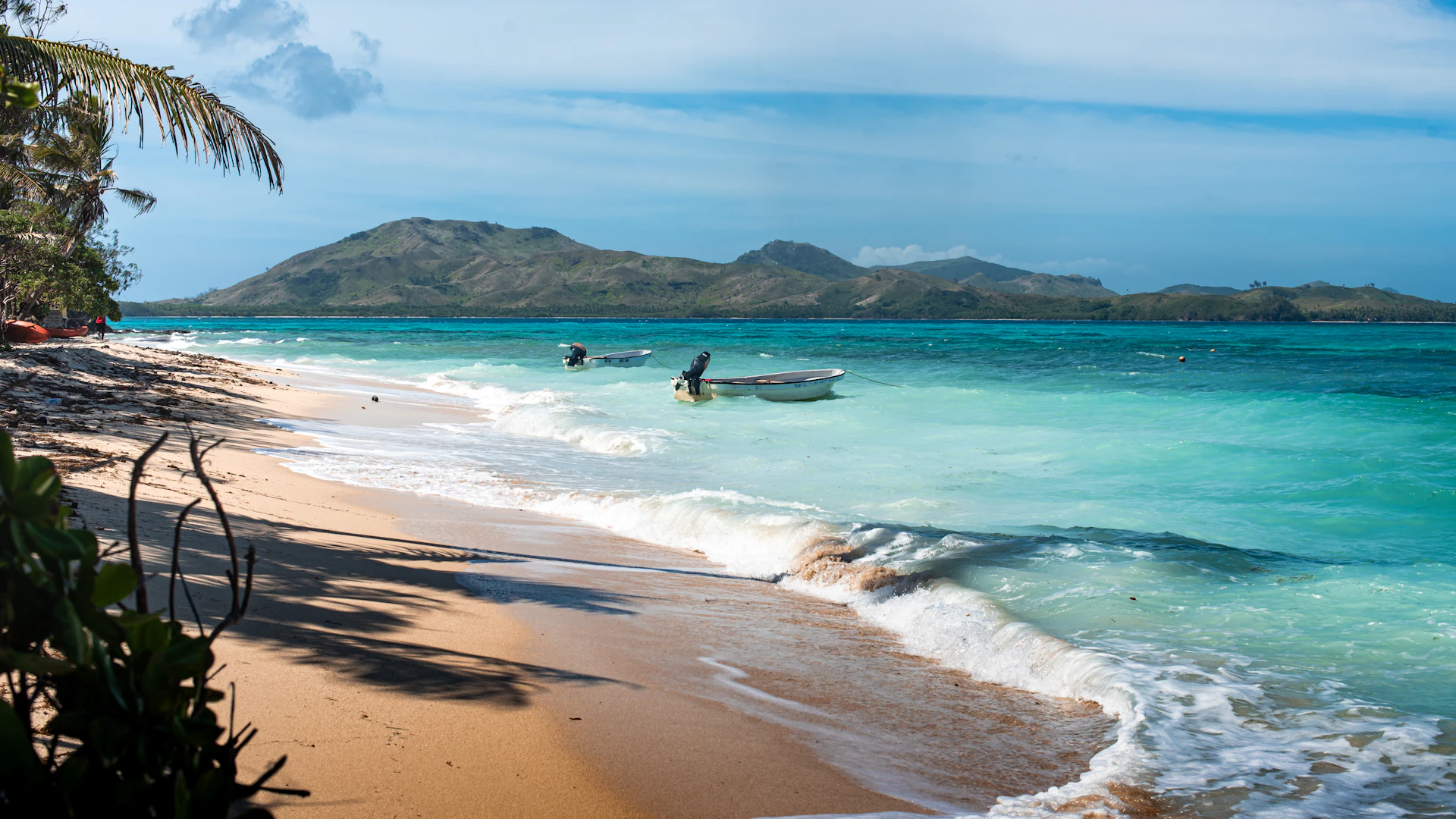
Stand on the western shore of Viti Levu in the late afternoon and the horizon is not empty. It is crowded with islands. Closest in are the low, palm-topped silhouettes of the Mamanucas, scattered across a sheet of turquoise like someone spilled them there. Behind them, further out and fainter, rise the high blue ridgelines of the Yasawas, marching away to the north until they dissolve into haze. Every one of them is reached the same way it has always been reached — by water.
This is the Fiji of the postcards — lagoons, reefs, sandbars, villages, beaches that need no filter. Most visitors see exactly one island of it: fly in, transfer to a resort, stay put. A boat changes the arithmetic entirely.
Two chains, one horizon
Both chains lie off the northwest coast of Viti Levu, Fiji's main island, and the boats that serve them leave from the same stretch of coast near Nadi — Port Denarau is the great departure point, a short hop from the international airport. From there the geography is simple. The Mamanucas are the near chain, starting within easy reach of the marina. The Yasawas begin where the Mamanucas end and run north for a long way, a chain of bigger, taller, wilder islands that takes real hours of boat time to explore.
The Mamanucas: close, calm and generous
The Mamanucas are the easy half of the deal. They are low islands ringed by reef, sitting in famously calm, protected water, and they are where most of Fiji's island resorts cluster. Malolo, the largest of the group, anchors the chain; around it spread smaller islands, coral cays and patches of reef in every direction.
This is also where you find one of the chain's quiet celebrities: Monuriki, a small uninhabited island of green slopes and white sand that played the desert island in the film Cast Away. It looks the part because it is the part — no resort, no jetty, just an island the way the whole chain must once have looked.
For a day trip, the Mamanucas are close to perfect. The runs between islands are short, the lagoons are sheltered, and you can fit a genuine variety into daylight hours — a snorkel on one reef, a swim off a sandbar, lunch at anchor, a slow cruise past the resort islands on the way home.
The Yasawas: the wilder run north
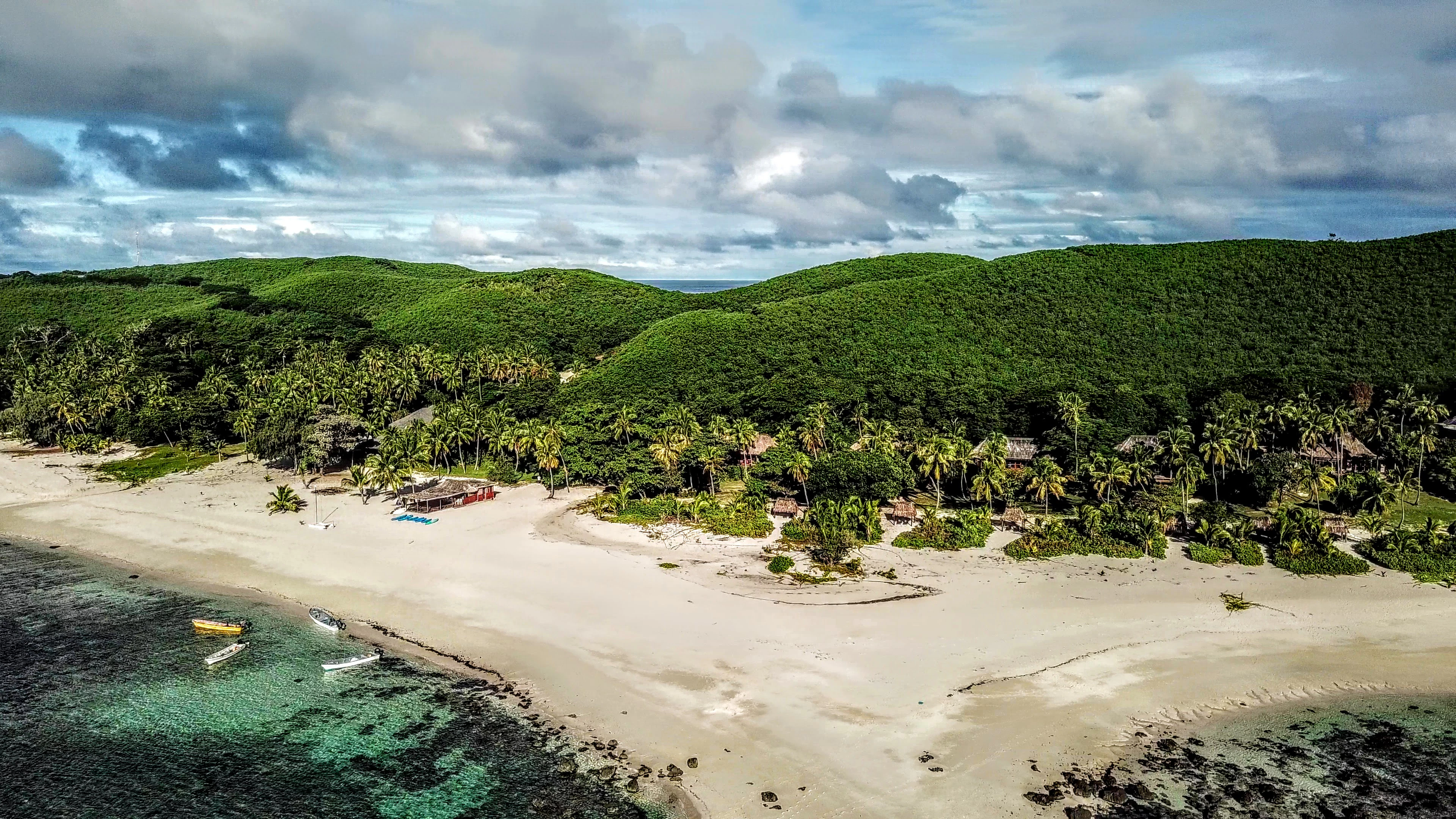
The Yasawas are a different proposition, and that is exactly their appeal. These are volcanic islands, tall where the Mamanucas are low, with dramatic ridgelines that catch the light and drop steeply to the water. Villages sit along their shores, resorts are fewer and further between, and the whole chain feels a generation less developed. Waya, near the southern end, is the classic first sight of them — its rugged peaks look almost Marquesan.
In the far north, Sawa-i-Lau is famous for its limestone caves, where you swim inside the island itself in a pool of filtered blue light.
The Blue Lagoon is a real place
It surprises people, but the Blue Lagoon is not a marketing name — it is an actual lagoon in the northern Yasawas, a sheltered basin of improbably clear water between a cluster of islands near Nacula. The 1980 film of the same name was shot in these islands, and the lagoon remains one of the most beautiful anchorages in the South Pacific.
A day by boat versus a week at one resort
Here is the honest difference. A resort gives you one island, one lagoon, one beach — beautifully, but singularly. A boat gives you the pick of the day. If the wind is working one side of the chain, you anchor on the other. If a sandbar is showing, you go to the sandbar. If the snorkelling is better two islands along, that is a twenty-minute decision, not a change of booking.
The two work together, too: base yourself ashore, then use a boat day to see everything your island is not.
Snorkelling, sandbars and the tide
Two things deserve planning around. The first is the snorkelling: these chains are laced with coral reefs, and the best of it lies over the reef edges away from the busy beaches — exactly the spots a boat reaches easily and a shore swimmer does not. The second is the tide. Scattered through the Mamanucas are sandbars and cays that only exist at low tide, surfacing from the lagoon for a few hours as impossibly white curves of sand. Arriving by boat as one appears, and having it to yourselves, is a genuine only-in-Fiji moment — entirely a matter of timing, which is what your crew is for.
Be honest about the distances
The Mamanucas fit inside a day with room to spare. The Yasawas do not — or at least, not casually. The southern end of the chain is reachable on a big, committed full-day run, but the distances are real: hours of open-water cruising each way, which eats the swimming time if you try to do too much. The far north — the Blue Lagoon, Sawa-i-Lau — is better treated as a multi-day ambition, done properly with nights on the water or a stay up the chain. A good plan matches the ambition to the hours honestly, and the Mamanucas-first day is the right call for most groups.
When to go
Fiji's dry season runs from roughly May to October — the winter trade-wind months, when the air is drier, the heat is gentler and the weather is at its most settled. That is the prime window for a day on this water. November through April is warmer and more humid, with more rain about and the tropical low season to respect; the sea stays warm all year round.
Planning a Fiji day on the water
Fiji works differently from our Australian harbours — days here are arranged through the Ahoy network, matched to your dates, your group and how far up the chains you want to reach. Tell us whether your ambition is a lazy Mamanuca lagoon day or the long run north, and contact the team — they will put the right boat and the right plan under it.
Related Guides
Ready to plan the best day of your holiday?
Browse the Sydney fleet and start planning your day on the harbour.
Browse Available Boats